
· by Michael Blair, Nashville's Irrigation
Fall is the season to put down cool-season seed here. Virginia Cooperative Extension’s fall lawn care publication calls late summer to mid-fall the best time to establish cool-season turfgrass, with warm days and cool nights that suit tall fescue germination. When an overseed comes up thin, one of the first things we check is whether the irrigation controller is still on its summer program, because new seed and an established lawn want different watering and the schedule has to change as the seedlings grow. We work through it in three phases, from sowing to the first mows.
How should new seed be watered until it sprouts?
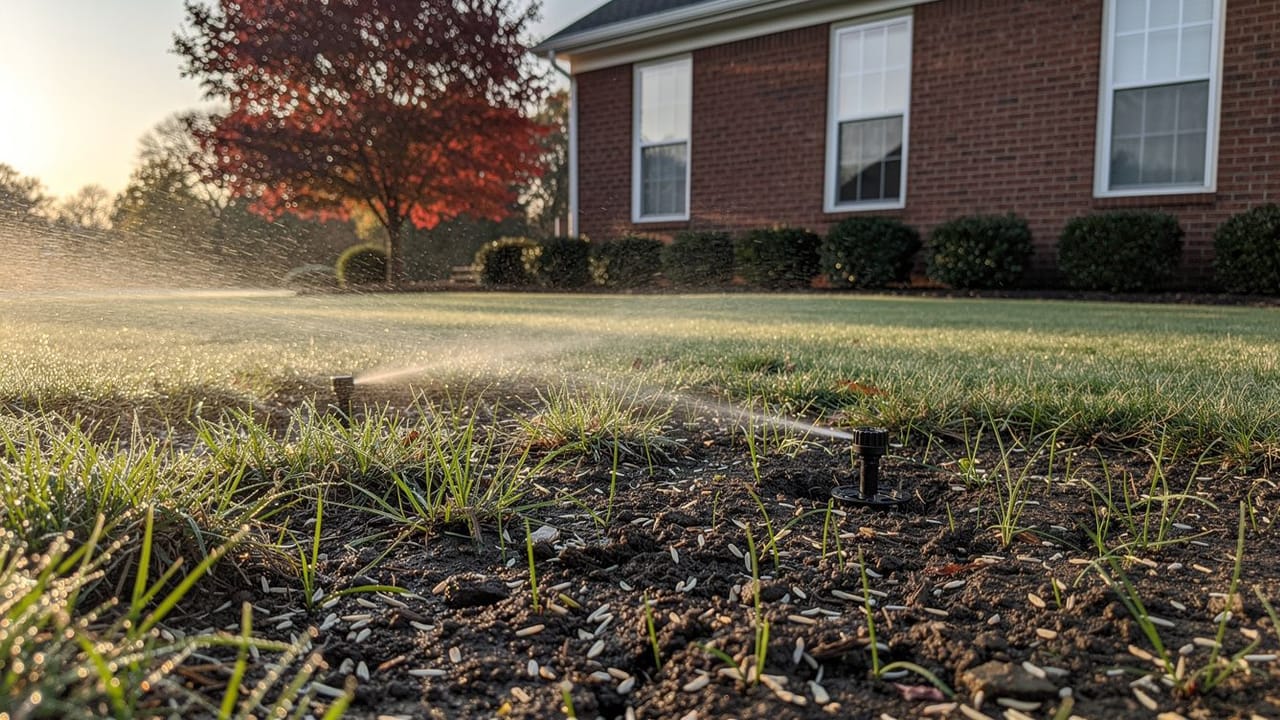
Until the seed sprouts, the seedbed has to stay moist. NC State Extension’s tall fescue maintenance calendar says to keep it moist with light watering several times per day and not to let the seedlings dry out. We set short runs on each zone and space them through the day, so the surface never gets a chance to dry between cycles. One long soak a day is the wrong tool here: the Virginia Tech publication warns that excessive water can wash the seed away or drown it.
How long the seed takes to show depends on the weather and the soil, so we go by what the lawn is doing rather than the calendar. Watch for the green haze, and keep the light cycles going until it is there across the whole lawn, not only in the shady patches that stay damp on their own. One thing to settle before sowing: Virginia Tech notes that the pre-emergent herbicides applied in August or September for annual bluegrass and winter weeds will also prevent cool-season grass seed from germinating.
How does watering change once the seedlings are up?
Once the seedlings are up, the water starts to come down. Virginia Tech’s advice is to keep newly established sites moist but not saturated, because new seedlings are very susceptible to soil-borne fungi that thrive in wet ground, and to cut back gradually on the water as establishment goes on. The same publication recommends fungicide-treated seed for new seedings to combat damping-off, which is worth deciding before the seed is bought.
We move to fewer, slightly longer runs and put them in the early morning. The University of Missouri Extension’s cool-season lawn calendar, writing about established lawns, says early morning irrigation reduces the time leaves stay wet, and NC State’s calendar says watering between 2 a.m. and 8 a.m. decreases the incidence of certain diseases. Puddles, or ground that is still wet when the next cycle is due, mean the zone is getting more than the seedlings can use, and we skip a cycle rather than run it.
- Germination: light runs several times a day, seedbed kept moist
- Seedlings: fewer, slightly longer runs in the early morning, moist but never saturated
- Establishing: longer runs, spaced further apart
- After a couple of mows: about an inch a week for established fescue, rain included
Phase three: establishing
When the new grass is a few inches tall and has been mowed a couple of times, we stretch the interval between waterings and lengthen each run so the water goes deeper. Virginia Tech ties that gradual cutback to promoting a deep root system, and Missouri’s calendar gives the pattern an established lawn is heading toward: irrigate two to three times a week as the soil can absorb it, and avoid frequent daily watering.
From there the lawn goes onto its normal schedule. NC State puts tall fescue’s need at about an inch of water a week, ideally not all at once, and Missouri counts rain and irrigation together toward that inch, so a wet fall week may need little or nothing from the system. Our post on how much to water a Nashville lawn covers how we set run times once the grass is established. We would rather turn the controller down as the weather cools than leave a September program running into November, since wet ground is what those seedling fungi favor. If changing programs by hand is the sticking point, our controller work can make the season changes easier to keep up with.
Coverage, and the patches that fail anyway
An overseed shows up gaps in the coverage that a thick established lawn can hide. Bare strips that follow the edge of a spray pattern, or a side of the lawn that a head no longer reaches, are where we look at the system before blaming the seed. We run each zone and watch it before sowing rather than after; our post on dry patches and coverage goes through what we look for, and a tilted or broken head is a sprinkler repair worth doing before the seed goes down.
Slopes and heavy clay need their own approach. NC State’s advice for clay soils, which accept water slowly, is to irrigate just until runoff occurs, wait for the water to be absorbed, then start again, and Missouri’s calendar says steep slopes, hard spots and hot areas need special attention, including extra-slow watering. Both are written for established lawns, but a seedbed on a slope has the same problem with less to hold it, which is an argument for putting slopes on their own zone if the system allows it. If you want the zones checked before you sow, get in touch and we will walk them with you.
Sources
- Virginia Cooperative Extension (Virginia Tech), Fall Lawn Care (430-520) — Late summer to mid-fall is the best time to establish cool-season turf; irrigate lightly and frequently until germination; excessive water can wash away or drown seed; moist but not saturated; seedling fungi thrive in wet ground; fungicide-treated seed against damping-off; cut back gradually to promote deep roots; fall pre-emergents prevent seed germination
- NC State Extension, Tall Fescue Lawn Maintenance Calendar — Keep the seedbed moist with light watering several times per day; watering between 2 a.m. and 8 a.m. decreases certain diseases; about 1 inch of water a week, not all at once; clay soils watered until runoff, then again after it soaks in
- University of Missouri Extension, Cool-Season Grasses: Lawn Maintenance Calendar (G6705) — Early morning irrigation reduces leaf wetness; established lawns irrigated two to three times a week, avoiding daily watering; about 1 inch of rain or irrigation a week; steep slopes and hard spots need special attention and extra-slow watering
FAQ
Watering a Fall Overseed Without Drowning It — questions
How often should I water new grass seed in the fall?
Until it sprouts, lightly several times a day so the seedbed stays moist and never dries out, which is what NC State Extension’s tall fescue calendar recommends. Once the seedlings are up, we cut back to fewer, slightly longer runs in the early morning, keeping the ground moist but not saturated. As the grass establishes, the runs get longer and further apart. The schedule changes as the roots go down.
Can you overwater grass seed?
Yes. Before it sprouts, too much water can wash the seed away or drown it, and once the seedlings are up, ground that stays wet favors the soil-borne fungi that attack them, according to Virginia Tech’s fall lawn care publication. Puddles, or a surface that is still wet when the next cycle is due, are the signs to cut back. The same publication recommends fungicide-treated seed against damping-off.
When can I go back to normal watering after overseeding?
When the new grass has been mowed a couple of times and is clearly filling in. There is no fixed number of weeks, because it depends on the weather. From there NC State Extension puts an established tall fescue lawn at about an inch of water a week, ideally not all at once, and rain counts toward it, so the controller should be turned down rather than left on a September program.
Why isn’t my grass seed growing?
Check the weed control first: Virginia Tech notes that pre-emergent herbicides put down in August or September for winter weeds also stop cool-season seed from germinating. A controller still on its summer program won’t keep a seedbed moist, and too much water can wash seed away. Bare strips along a spray pattern’s edge point to coverage.