
· by Michael Blair, Nashville's Irrigation
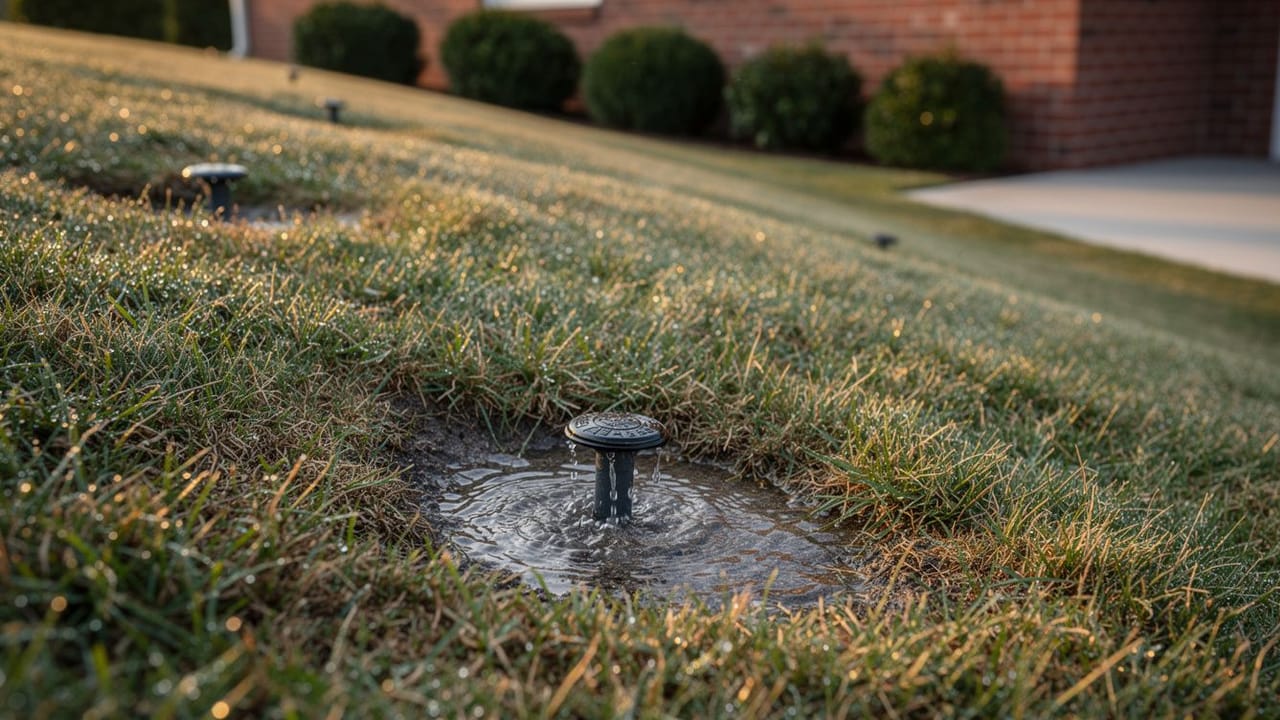
The controller says the cycle ended an hour ago, but one zone is still spraying. Or every zone shuts off on time and one head at the bottom of the yard keeps bubbling long afterward, leaving a patch that never dries. Either one can go unnoticed for a while, because, as the EPA’s WaterSense Sprinkler Spruce-Up page points out, most irrigation systems run overnight or early in the morning. So the first sign may be the water bill. WaterSense’s Fix a Leak Week page says an irrigation leak about the thickness of a dime can waste about 6,300 gallons a month, and if a jump in the bill is what sent you looking, our post on why a water bill jumps in summer covers the other usual suspects. The two faults here have different causes and different fixes, and a few minutes of watching tells you which one you are dealing with.
What should I do first when a zone won’t stop?
Close the irrigation system’s own shutoff, the valve on the irrigation line between the house supply and the zone valves, and the running zone stops without cutting water to the house. Not every system has one. Rain Bird’s winterizing guide suggests installing a main shutoff for the irrigation system if yours has none, and we add one during the repair when it is missing. Until then, the house’s main shutoff will stop the zone, along with every tap indoors.
Before touching anything else, note what you saw: which zone was running, whether the controller showed it on or off, and whether water was coming from every head on that zone at full pressure or just trickling from one or two low ones. Rain Bird makes the same split. Its troubleshooting cards for the PGA valve head this problem “Valve Won’t Shut Off (Weeping or Full Flow),” and knowing which of the two you have narrows down where to look.
Why does a whole zone keep running with the controller off?
If the controller is off and the zone runs at full pressure anyway, the valve is stuck open. A zone valve has a rubber diaphragm that closes against a seat inside the valve body, worked by an electric solenoid that sits on the bonnet. The PGA cards list what keeps one from closing: a diaphragm or valve seat that is fouled or damaged, a diaphragm that is damaged or out of alignment, dirt interfering with the solenoid, a loose solenoid, and a blocked diaphragm filter or pilot hole. A manual bleed left open does it too. Rain Bird’s PGA valve manual has you turn the solenoid back to its off position after the zone has been run by hand and retighten the bleed screw if it leaks, with finger pressure only, since overtightening can damage the solenoid seat.
If the zone is running because the controller is calling for it, the problem is upstream, and the manual’s first step for water that will not shut off is to check that the controller is off. A manual run that was never cancelled, or a run time set far longer than intended, looks like a stuck valve from the window. Overlapping programs are worth a look as well: the PGA cards note that more than one valve open at a time draws down inlet pressure and leaves a valve struggling to close, and they suggest the controller’s station delay or a change in timing. To settle which side it is, put the controller in rain mode or switch off its power; the winterizing guide explains that rain mode simply stops the signals to the valves. If the zone stops, look at the controller. If it keeps going, it is the valve. The opposite fault, a zone that will not come on at all, has its own post on one irrigation zone that stopped working.
- Controller off, zone still running at full pressure: the valve is stuck open
- Zone stops when the controller is in rain mode or unpowered: the controller or its program
- Zone shuts off but one low head keeps draining: low-head drainage
- Water pooling between cycles with no zone running: possibly an underground leak
When one low head keeps draining
A head that dribbles for a while after its zone shuts off, then stops, points away from the valve. When a zone stops, the water left in the lateral pipe can run downhill and out of the lowest head. Rain Bird’s page on common design problems describes water puddling around heads installed at the bottom of slopes or hills, leaving soggy areas that can kill grass or encourage fungus.
Rain Bird’s answer is a head with a check valve built in, which it says stops low head drainage and the puddling with it. That is a head swap at the low end of the zone, part of our sprinkler repair work. If a low head dribbles constantly, not just after a cycle, the valve upstream is weeping. The Spruce-Up page warns that valves which cannot close completely let a system slowly seep water even when it is turned off, and the first cause the PGA manual gives for heads that emit water with the valve off is dirt or debris lodged on the diaphragm seat. WaterSense also asks homeowners to look for water pooling on the surface between cycles, which it says could be a sign of an underground leak.
Fix it before the winter blowout
A valve that is not sealing should be repaired before the system is winterized, not left until spring. The point of winterizing, as Rain Bird’s guide puts it, is to get water out of the pipes so it cannot freeze, expand and break them, and a valve that seeps can let water back into lines that were just cleared. Rain Bird lists the compressed air blow-out as one way to drain them and, because of the potential safety risks, recommends calling a local irrigation specialist for it. That is our winterization service, and the steps are laid out in our post on winterizing an irrigation system in Tennessee.
Rebuilding a valve follows the PGA cards and manual: turn off the water, flush the valve with the manual bleed, remove the bonnet, then clean or replace the diaphragm, rinse the filter screen on its underside and reassemble. It is a small job when the valve sits in a box someone can reach. A box that has settled or been grassed over can take longer to find than the valve takes to fix, so once the valve is done we raise the box, clear it out and mark it on a sketch of the yard. If you would rather hand it over, ask us for a free estimate.
Sources
- U.S. EPA WaterSense, Sprinkler Spruce-Up — Most systems run overnight or early morning, so problems are hard to spot; valves that cannot close completely let the system seep water when off; pooling between cycles could be an underground leak
- U.S. EPA WaterSense, Fix a Leak Week — An irrigation leak 1/32 of an inch across, about the thickness of a dime, can waste about 6,300 gallons a month
- Rain Bird, How do I winterize my irrigation system? — Install a main irrigation shutoff if there is none; rain mode stops signals to the valves; drain pipes so water cannot freeze and break them; compressed air blow-out and its safety caution
- Rain Bird, PGA Valve Troubleshooting cards — Valve won’t shut off, weeping or full flow: diaphragm, seat, solenoid and filter causes; more than one valve open draws down inlet pressure; flush with manual bleed, remove bonnet, clean or replace diaphragm
- Rain Bird, PGA Valve manual and troubleshooting guide — Check the controller is off; solenoid back to off after manual operation; retighten bleed screw; over-tightening risks the solenoid seat; debris on the diaphragm seat; diaphragm filter screen
- Rain Bird, Common Design Problems — Water puddles around heads at the bottom of slopes; heads with a built-in check valve stop low head drainage and puddling
FAQ
A Sprinkler Zone That Will Not Shut Off — questions
Why does my sprinkler keep running when the controller is off?
First make sure the controller really is off or in rain mode, since a manual run or a long run time can look the same. If the zone still runs at full pressure, the zone valve is stuck open. Debris on the diaphragm seat, a damaged or misaligned diaphragm, dirt in the solenoid or a solenoid left open after a manual run will all do it. Close the irrigation shutoff to stop the water, then the valve needs cleaning or rebuilding.
Why does one sprinkler head leak after the system shuts off?
If it drains for a while and then stops, it is likely low-head drainage: water left in the pipe runs downhill and out of the lowest head once the zone stops, which is why it shows up at the bottom of a slope. A head with a built-in check valve stops it. If the head leaks all the time, the valve upstream is not sealing.
Where is the shutoff for my sprinkler system?
Many systems have a separate shutoff on the irrigation line, between the house supply and the zone valves, sometimes in a valve box of its own. If there is none, the main shutoff for the house will stop it, though it cuts the water indoors too, and Rain Bird suggests installing a dedicated irrigation shutoff.
How do I turn off a sprinkler zone?
Start at the controller: cancel any manual run, or put it in rain mode, which stops the signals going to the valves. If the zone still runs, the valve itself is stuck, so close the irrigation shutoff between the house supply and the zone valves, or the house main when there is no separate one.